Longevity-First Training Wins at the Gym
Staying consistent without nagging aches takes a clear plan, patient coaching, and simple daily habits. A maintenance-first approach focuses on mobility, form, and smarter loading so you keep training week after week. That means upgrading warm-ups, tracking recovery signals, and matching intensity to your real life. You’ll spot small issues early, like tight hips or sore wrists, before they grow into roadblocks. This is not about doing less; it’s about doing what works better. We’ll cover how to map your season, choose inputs that reduce strain, and run sessions on time. You’ll see how quality checks prevent plateaus and how to tune your budget of time and energy. Real examples—from a garage setup to a boutique floor—show what it looks like day to day. The goal is durable progress you can actually feel, with fewer detours and more steady wins.
Set realistic blocks and goals for durability
Good planning starts with a simple calendar broken into base, build, and peak blocks that match travel. You might map Q2 to strength, then shift toward conditioning before a fall race to line up with your schedule. See ideas Gym and adjust for holidays or busy periods. A structure built around push, pull, hinge, squat, and carry makes progress reliable. Center days on one key lift, then plug in support work with reduced volume during high-stress weeks.
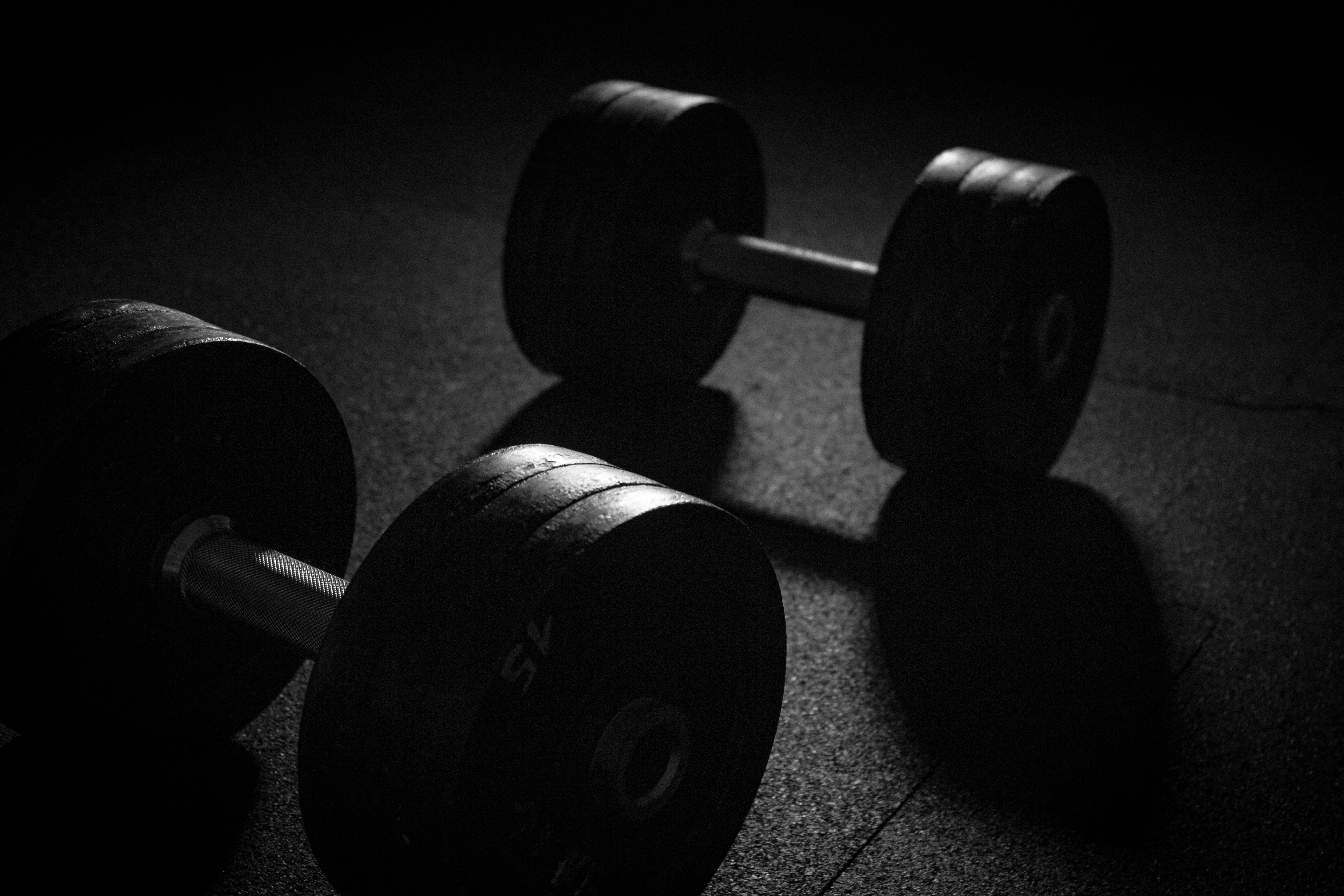
Match goal intensity to how well you recover. A teacher on break can push volume, while a new parent may cut accessories and lean on walks. Use three-week waves with one deload, checking notes on sleep and soreness. When elbows complain, lower volume a notch, and extend the wave. This keeps momentum high while risk stays low.
Select materials and gear for safer reps
Your warm-up is the first «material» you bring to a session and it drives how you feel. Add five minutes of nasal breaths, then hip CARs and ankle rocks to unlock range. For guidance Gym and tailor the moves to your tight spots. Pick neutral handles to relieve elbow strain. With dumbbells or cables, you’ll keep load without angry joints.
Make low-friction choices a habit. Hex-bar pulls instead of heavy conventional deadlifts can cut fatigue, especially on long workdays. Sled work keeps knees happier than sprints while still spiking heart rate. Straps keep the goal the goal, then train grip on separate days. Smart swaps beat stubborn plans every time.
{Run sessions on time {with simple blocks|using clear slots}|Schedule training flow {that respects recovery|that fits real life}|Organize weekly workflows {to avoid burnout|to reduce chaos}|Keep workouts moving {with focused blocks|through tight pacing}
Break training into three clear parts: prep, main, and finishers {with clocks visible|with timers set|with cues ready}. Use 8–10 minutes for mobility and activation {so your first set feels like set three|so tissues are primed|so form locks in early}. To see sample splits Gym and scale them to your workweek. {Then hit one primary lift for 4–6 work sets|Center the session on one big lift for 4–6 sets}, followed by {two|three} accessories that target weak links. {Cap it with five minutes of carries, breath work, or easy wattage|Close with brief carries, breathing, or low-impact cardio}.
{Pacing matters more than hero sets|Steady pacing beats random grind}. {Set EMOMs for accessories|Run EMOMs on assistance work|Use EMOM structure for support moves} to keep rests honest and effort consistent. Rotate density blocks on busier weeks {to get more done in less time|to compress volume|to trim wasted minutes}. {If you’re gassed, cut a set and keep form pristine|When gas tank dips, drop a set and protect form}. {Tiny trims now prevent big layoffs later|A small cut today protects tomorrow’s training}.
{Keep quality high {and risk low|while minimizing risk}|Quality checks {that stop overuse|that prevent setbacks}|Form and tempo {safeguards|guardrails} for reliable gains|Build resilience {with standards|through consistent standards}
{Write two cues on your card before each main lift|Note two simple cues before your big lift|Pick two cues you’ll repeat on every work set}. For squats, try «ribs down» and «knees track» {to keep spine neutral|to clean up torque|to avoid folding}. For more examples Gym you can adapt to your needs. {Use slow eccentrics on Week 1 of each wave|Start each wave with tempo work|Open blocks with controlled negatives} to groove patterns. {Add pauses for positions you usually rush|Pause in weak spots to improve control|Stop in the hole to own the rep}.
{Measure quality, not just load|Track how, not only how much}. Record bar speeds on last reps with a phone {or a cheap sensor|or timing apps|or rep-count tools}. {If speed craters, the set is the last|When speed drops hard, end the set|Stop once speed tanks} and note it. {Use RPE 7–8 most days|Live around RPE 7–8|Keep most top sets at RPE 7–8}, then hit RPE 9 on testing weeks. {You’ll last longer and still PR on schedule|Longevity and progress can live together}.
{Maintain results {with weekly tune-ups|through simple care}|Lifecycle habits {that lock in gains|that keep you training}|Recovery routines {for staying power|for year-round consistency}|Care practices {that support progress|that guard your momentum}
{Think of recovery as part of training, not afterthought|Recovery sits inside the plan, not outside it|Make recovery a programmed block, not a bonus}. Use a 10-minute cool-down: 3 minutes nasal walking, 4 minutes easy stretching, 3 minutes box breathing {to switch gears|to shift your state|to calm the system}. For quick protocols gym that fit busy days. {Finish with a protein-forward snack and water|Grab protein plus water right after|Hit protein and hydration on exit}, then a light walk after dinner. {These tiny bookends pay compound interest over months|Small closers add up to big durability}.
{Do a Sunday five-point check|Run a weekly five-item audit|Take five checks each Sunday} on sleep, steps, joints, stress, and schedule. If sleep tanks, {move heavy day to midweek|slide big lifts to midweek|shift top sessions later}. If joints ache, {swap to machines for one wave|pick cables instead for a block|use bands for deloads}. {If work explodes, cut volume by a third for seven days|When work piles up, trim volume by a third for a week}. {Protecting the base keeps the whole season alive|Guard the base and the year stays on track}.
Conclusion: {A season built on clear phases, joint-friendly tools, tight pacing, sturdy quality checks, and simple care habits delivers durable progress|Put phases, smart tools, firm pacing, steady standards, and easy care on repeat, and progress holds}. {You’ll train more weeks, skip fewer sessions, and feel better under the bar|Expect more green weeks on the calendar and fewer forced breaks}. {Small, boring wins stack into big results that actually last|Tiny, consistent habits turn into lasting strength and energy}. Keep the plan light, the standards clear, and your next wave will meet you right where you are.
Set realistic blocks and goals for durability
Good planning starts with a simple calendar broken into base, build, and peak blocks that match travel. You might map Q2 to strength, then shift toward conditioning before a fall race to line up with your schedule. See ideas Gym and adjust for holidays or busy periods. A structure built around push, pull, hinge, squat, and carry makes progress reliable. Center days on one key lift, then plug in support work with reduced volume during high-stress weeks.
Match goal intensity to how well you recover. A teacher on break can push volume, while a new parent may cut accessories and lean on walks. Use three-week waves with one deload, checking notes on sleep and soreness. When elbows complain, lower volume a notch, and extend the wave. This keeps momentum high while risk stays low.
Select materials and gear for safer reps
Your warm-up is the first «material» you bring to a session and it drives how you feel. Add five minutes of nasal breaths, then hip CARs and ankle rocks to unlock range. For guidance Gym and tailor the moves to your tight spots. Pick neutral handles to relieve elbow strain. With dumbbells or cables, you’ll keep load without angry joints.
Make low-friction choices a habit. Hex-bar pulls instead of heavy conventional deadlifts can cut fatigue, especially on long workdays. Sled work keeps knees happier than sprints while still spiking heart rate. Straps keep the goal the goal, then train grip on separate days. Smart swaps beat stubborn plans every time.
{Run sessions on time {with simple blocks|using clear slots}|Schedule training flow {that respects recovery|that fits real life}|Organize weekly workflows {to avoid burnout|to reduce chaos}|Keep workouts moving {with focused blocks|through tight pacing}
Break training into three clear parts: prep, main, and finishers {with clocks visible|with timers set|with cues ready}. Use 8–10 minutes for mobility and activation {so your first set feels like set three|so tissues are primed|so form locks in early}. To see sample splits Gym and scale them to your workweek. {Then hit one primary lift for 4–6 work sets|Center the session on one big lift for 4–6 sets}, followed by {two|three} accessories that target weak links. {Cap it with five minutes of carries, breath work, or easy wattage|Close with brief carries, breathing, or low-impact cardio}.
{Pacing matters more than hero sets|Steady pacing beats random grind}. {Set EMOMs for accessories|Run EMOMs on assistance work|Use EMOM structure for support moves} to keep rests honest and effort consistent. Rotate density blocks on busier weeks {to get more done in less time|to compress volume|to trim wasted minutes}. {If you’re gassed, cut a set and keep form pristine|When gas tank dips, drop a set and protect form}. {Tiny trims now prevent big layoffs later|A small cut today protects tomorrow’s training}.
{Keep quality high {and risk low|while minimizing risk}|Quality checks {that stop overuse|that prevent setbacks}|Form and tempo {safeguards|guardrails} for reliable gains|Build resilience {with standards|through consistent standards}
{Write two cues on your card before each main lift|Note two simple cues before your big lift|Pick two cues you’ll repeat on every work set}. For squats, try «ribs down» and «knees track» {to keep spine neutral|to clean up torque|to avoid folding}. For more examples Gym you can adapt to your needs. {Use slow eccentrics on Week 1 of each wave|Start each wave with tempo work|Open blocks with controlled negatives} to groove patterns. {Add pauses for positions you usually rush|Pause in weak spots to improve control|Stop in the hole to own the rep}.
{Measure quality, not just load|Track how, not only how much}. Record bar speeds on last reps with a phone {or a cheap sensor|or timing apps|or rep-count tools}. {If speed craters, the set is the last|When speed drops hard, end the set|Stop once speed tanks} and note it. {Use RPE 7–8 most days|Live around RPE 7–8|Keep most top sets at RPE 7–8}, then hit RPE 9 on testing weeks. {You’ll last longer and still PR on schedule|Longevity and progress can live together}.
{Maintain results {with weekly tune-ups|through simple care}|Lifecycle habits {that lock in gains|that keep you training}|Recovery routines {for staying power|for year-round consistency}|Care practices {that support progress|that guard your momentum}
{Think of recovery as part of training, not afterthought|Recovery sits inside the plan, not outside it|Make recovery a programmed block, not a bonus}. Use a 10-minute cool-down: 3 minutes nasal walking, 4 minutes easy stretching, 3 minutes box breathing {to switch gears|to shift your state|to calm the system}. For quick protocols gym that fit busy days. {Finish with a protein-forward snack and water|Grab protein plus water right after|Hit protein and hydration on exit}, then a light walk after dinner. {These tiny bookends pay compound interest over months|Small closers add up to big durability}.
{Do a Sunday five-point check|Run a weekly five-item audit|Take five checks each Sunday} on sleep, steps, joints, stress, and schedule. If sleep tanks, {move heavy day to midweek|slide big lifts to midweek|shift top sessions later}. If joints ache, {swap to machines for one wave|pick cables instead for a block|use bands for deloads}. {If work explodes, cut volume by a third for seven days|When work piles up, trim volume by a third for a week}. {Protecting the base keeps the whole season alive|Guard the base and the year stays on track}.
Conclusion: {A season built on clear phases, joint-friendly tools, tight pacing, sturdy quality checks, and simple care habits delivers durable progress|Put phases, smart tools, firm pacing, steady standards, and easy care on repeat, and progress holds}. {You’ll train more weeks, skip fewer sessions, and feel better under the bar|Expect more green weeks on the calendar and fewer forced breaks}. {Small, boring wins stack into big results that actually last|Tiny, consistent habits turn into lasting strength and energy}. Keep the plan light, the standards clear, and your next wave will meet you right where you are.
0 комментариев